Showing posts with label WATER SOFTENING. Show all posts

Monday, September 28, 2015

Learn free Civil Engineering by Civilustaad about RAINWATER HARVESTING TANKS

http://civilustaad.blogspot.com/
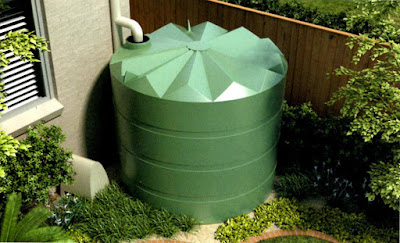
RAINWATER HARVESTING TANKS
Rainwater harvesting is a technique of collection and storage of rainwater into natural reservoirs or tanks, or the infiltration of surface water into subsurface aquifers (before it is lost as surface runoff). One method of rainwater harvesting is rooftop harvesting. 


With rooftop harvesting, mainly any surface — tiles, plastics, metal sheets, but not grass or palm leaf — can be used to intercept the flow of rainwater and give a household with high-quality drinking water and year-round storage. Other uses comprise water for livestock, gardens, and irrigation, etc.


The reasons for using rainwater harvesting systems answer three questions:

What: Rainwater harvesting will develop water supply, food production, and finally food security.


How: Since rainwater harvesting leads to water supply which leads to food security, this will significantly contribute to income generation.


Who: Water insecure households or individuals in rural areas will advantage the most from rainwater harvesting systems.

Learn free Civil Engineering by Civilustaad about LAKE IACOBDEAL

http://civilustaad.blogspot.com/

LAKE IACOBDEAL
Lake Iacobdeal called by locals "The Fountain" is a man-made lake, formed into a cavetti resulted behind the withdrawal of granite. 


It is located in Turcoaia, Romania County, in a former quarry on the hill Iacobdeal.


The area was covered by water removal point to very harsh granite.


By exploiting the rock of the quarry it came in the deep of the granitic massif, attainment a feldspar vein, difficult to process. Hence, there is need for mass excavation of two galleries stones.


All through the works, dynamited, it was issued an acviver layer, with wealthy flow, under pressure, which threw along the excavation, filling them with water, then poured basin occupying quarry cuvette.


Learn free Civil Engineering by Civilustaad about HYDROSTATICS

http://civilustaad.blogspot.com/
HYDROSTATICS
Hydrostatics, Branch of physics that deals with the characteristics of fluids at rest, chiefly with the pressure in a fluid or exerted by a fluid (gas or liquid) on an absorbed body. In applications, the philosophy of hydrostatics are used for problems connecting to pressure in deep water (pressure increases with depth) and high in the atmosphere (pressure lessens with altitude).


Tuesday, September 8, 2015

Learn free Civil Engineering by Civilustaad about Spillway design

http://civilustaad.blogspot.com/

Spillway Design

Structures which are designed to safely liberate excess water during floods from a reservoir to the river downstream exclusive of opening the reservoir gates.


Each reservoir can stock up a specific quantity of water, if this limit is breached during flash floods or tremendous downpours it is necessary to be able to safely discharge this overflow without putting populations downstream in danger.


The design of the spillway is a fragile piece of engineering which ensures that a set amount of water can be discharged securely.

Learn free Civil Engineering by Civilustaad about Wastewater treatment plant

http://civilustaad.blogspot.com/

Wastewater treatment plant


Wastewater treatment is directly related to the standards and/or expectations set for the effluent value. Wastewater treatment processes are intended to achieve improvements in the quality of the wastewater. The various treatment processes may reduce Suspended solids (physical particles that can choke rivers or channels as they settle under gravity)


 Biodegradable organics (e.g. BOD) which can provide as “food” for microorganisms in the receiving body. Microorganisms combine this matter with oxygen from the water to give way the energy they need to thrive and multiply; Sorry to say, this oxygen is too needed by fish and other organisms in the river. Heavy organic pollution can guide to “dead zones” where no fish can be bring into being; sudden releases of heavy organic loads can guide to dramatic “fishkills”.


Pathogenic bacteria and other disease causing organisms are most related where the receiving water is used for drinking, or where people would or else be in close up contact with it; and
Nutrients, including nitrates and phosphates. These nutrients can lead to elevated concentrations of unwanted algae, which can themselves become serious loads of biodegradable organic load.


Treatment processes might also neutralize or remove industrial wastes and toxic chemicals. This kind of treatment should perfectly take place at the industrial plant itself, prior to discharge of their effluent in municipal sewers or water courses.

Learn free civil engineering by civilustaad about WATER SUPPLY AND SANITATION

http://civilustaad.blogspot.com/

WATER SUPPLY AND SANITATION
 

Worldwide, almost 1 billion people are deficient in clean drinking water. 2.4 billion People have no access to clean sanitation facilities; 1.2 billion lack some sanitation facilities at all. Each day, an average of 5,000 children die owing to water and sanitation connected diseases. In 2000, through the Millenium Development Goals (MDGs), the global community dedicated to halving the proportion of people without access to clean water and basic sanitation by 2015. On the whole, the world is on way to meet the water MDG, but there are foremost gaps in many regions and countries, mainly in Sub-Saharan Africa. On current trends, the world will miss the sanitation target by a overwhelming 1 billion people.

Meeting the MDG water and sanitation targets is more than a health and dignity matter. The proof is compelling that achieving the water and sanitation goals would trigger a major hurdle forward in human development:


Water and sanitation are necessary to achieving all of the MDGs
Investment in water supply yields an average economic return of $4.4 to $1
Investment in sanitation yields an typical economic return of $9.1 to $1.

Human Development is further closely connected to access to water and sanitation than other development drivers UNDP has examined, including expenditure on health or education, and access to energy services.


The crisis in water and sanitation tremendously affects the poor. Availability of water is surely a concern for a number of countries. But the global water and sanitation crisis is largely rooted in poverty, power and inequality, not in physical accessibility. It is, first and foremost, a disaster of governance and thus governance reform must be a key pillar of any tactical approach to addressing the crisis.


Learn free civil engineering by civilustaad about WATER SOFTENING

http://civilustaad.blogspot.com/

WATER SOFTENING


It's easy to not recall how significant water is in our lives. Of course we need it in our diet, but in our homes, it's a tool--a fluid standard that carries material from one position to the next. In addition to one of the reasons it does this job well is that it's extremely good at holding things, either by suspending them or dissolving them.


Unlike most apparatus, though, water doesn't come with an instruction manual. If it did, you'd know why the dishes you thought were washed are covered with spots when dry, why the water in your shower leaves a film on everything it touches, and why what you consideration was clean water has clogged up your plumbing scheme.