Showing posts with label Soldier piles and lagging. Show all posts

Monday, September 28, 2015

Learn free Civil Engineering by Civilustaad about SHEET PILES info

http://civilustaad.blogspot.com/

SHEET PILES INFO
Sheet piling is an earth retention and excavation support method that retains soil, using steel sheet sections with interlocking edges. Sheet piles are installed in chain to design depth along the planned excavation perimeter or seawall alignment. The interlocked sheet piles form a wall for permanent or temporary lateral earth support with reduced groundwater inflow. Anchors can be integrated to provide additional lateral support if required.


Sheet pile walls have been used to carry excavations for below grade parking structures, pump houses, basements and foundations, construct cofferdams, and to build seawalls and bulkheads. Permanent steel sheet piles are designed to give a long service life.


Vibratory hammers are used to install sheet piles. If soils are too hard or dense, an impact hammer can be used to complete the installation. 
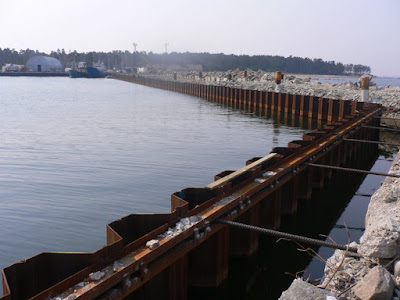

At assured sites where vibrations are a apprehension, the sheets can be hydraulically pushed into the ground.


Sheet piles are too a sustainable alternative since recycled steel is used in their construction, and the piles can often be reused.

Learn free Civil Engineering by Civilustaad about PILE CAP

http://civilustaad.blogspot.com/
PILE CAP

Loads from columns transferring to pile cap bring tensile forces at the bottom of the cap. For example, by using truss analogy to investigate a pile cap sitting on two piles with a column at the centre of the pile cap, the tensile force at the bottom is proportional to the pile spacing and is inversely proportional to depth of pile cap. The bottom reinforcement is calculated to resist the tensile stressed generated from loads in columns.


Side reinforcement may not be essential in pile cap (L.A. Clark (1983)). In fact, the prime aim of the side reinforcement is to control cracking. 


Nevertheless, as most pile caps are hidden from view and it is considered not necessary to give side reinforcement to pile caps based on aesthetic reason.


Occasionally, reinforcement may be calculated at the top of pile caps which serve as compression reinforcement. 


This kind of reinforcement is required in case there is a limitation on the depth of pile caps. Likewise shear reinforcement is introduced to the pile caps in case there is a restriction to the depth of pile caps.

Learn free Civil Engineering by Civilustaad about MEGA PILE

http://civilustaad.blogspot.com/

MEGA PILE
The Mega pile is a high-quality choice to the classic underpinning, valid in special and difficult working conditions.


It is a jacked pile that consists of short cylindrical elements, made from concrete or steel. 


By excavating underneath a structure, short lengths of pile can be inserted and jacked into the soil with a hydraulic jack, by means of the underneath of the existing structure as a reaction.


Tuesday, September 8, 2015

Learn free civil engineering by civilustaad about WATER SOFTENING

http://civilustaad.blogspot.com/

WATER SOFTENING


It's easy to not recall how significant water is in our lives. Of course we need it in our diet, but in our homes, it's a tool--a fluid standard that carries material from one position to the next. In addition to one of the reasons it does this job well is that it's extremely good at holding things, either by suspending them or dissolving them.


Unlike most apparatus, though, water doesn't come with an instruction manual. If it did, you'd know why the dishes you thought were washed are covered with spots when dry, why the water in your shower leaves a film on everything it touches, and why what you consideration was clean water has clogged up your plumbing scheme.


Learn free civil engineering by civilustaad about CORE TEST OF CONCRETE

http://civilustaad.blogspot.com/

Learn free civil engineering by civilustaad about CORE TEST OF CONCRETE

CORE TEST OF CONCRETE


Core test is normally required in the area of concrete industry to assess the concrete strength and occasionally it becomes the exceptional tool for safety review of existing concrete structures. Core test is consequently introduced in most codes. An general literature survey on diverse international codes’ provisions; including the Egyptian, British, European and ACI is done.


Learn free civil engineering by civilustaad about CIRCULAR CURVES IN SURVEYING

http://civilustaad.blogspot.com/

Learn free civil engineering by civilustaad about CIRCULAR CURVES IN SURVEYING

In the geometric intend of motorways, railways, pipelines, etc., the plan and setting out of curves is a vital aspect of the engineer’s occupation. The preliminary design is typically based on a succession of straight sections whose positions are defined mainly by the geography of the area. The intersections of pairs of straights are then linked by horizontal curves.


In the vertical design, intersecting gradients are linked by curves in the vertical plane.


Circular curves are used to link intersecting straight lines (or tangents). Circular curves are implicit to be concave. Horizontal circular curves are used to transition the alter in alignment at angle points in the tangent (straight) portions of alignments. An angle point is called a point of intersection or PI station; and, the change in alignment is definite by a deflection angle, Δ.


Types of Circular Curves are:

Simple Curve
Compound Curves
Reverse Curves
Broken Back Curves


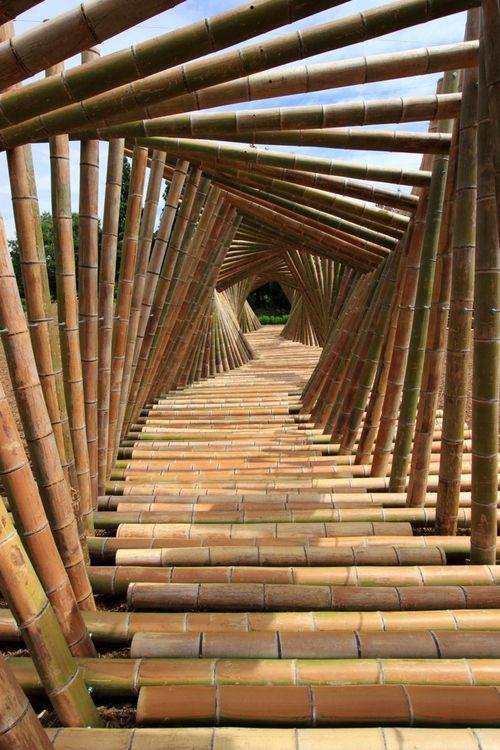
Learn free civil engineering by civilustaad about BAMBOO BRIDGE

http://civilustaad.blogspot.com/

Learn free civil engineering by civilustaad about BAMBOO BRIDGE

Sustainable building materials are universally and have been used in construction for many years. Their uses have been mainly particular until now, but as society moves to a “greener” inspection, their applications and versatility have increased significantly. In addition to the advances before now made, their efficient uses should continue to increase and spread over time with improved sustainability awareness and with additional enhancements
to technology.


One area for growth is the use of these materials in green bridges. Sustainable materials have turned out to be more common in the construction of buildings, but using these resources for bridge construction has been least. Through the course of this lessons many materials that can be categorized as sustainable were examined, but bamboo will be the center of attention of this report because of its plenty and overall versatility.


Bamboo is a naturally occurring sustainable material, which is ideal for green construction for many reasons. It grows similarly to grass so it is a construction material that is readily available. This makes it easy to harvest with minimal demolition to the
environment. It has many physical uniqueness that make it perfect for finishing aspects of building projects.


Learn free civil engineering by civilustaad about a Creative house located in Durban, Southafrica

http://civilustaad.blogspot.com/

A HOUSE LOCATED IN DURBAN

A house located in Durban, South Africa has a distinctive and innovative design, where the shape is very unconventional and internal decoration combines two styles of modern and conventional. Houses designed by Elmo Swart Architects named Wright House. This house conversion project by the architect made a number of changes in the form of an added room 3 bedroom traditional, art gallery, entertainment freedom and a fresh bedroom.


The mixture of old and new designs are actually creates a sensitivity of spectacular for anybody who saw it. How not to plan a house before the overhaul that looks less passionate then with slight modifications by adding modern style to this house makes it more passionate. Surprisingly two different styles can be combined into a beauty.


Learn free Civil Engineering By Civilustaad about Bicycle Roads

http://civilustaad.blogspot.com/

Bicycle Roads

Cycling infrastructure refers to the entire communications which may be used by cyclists. This includes the identical network of roads and streets used by motorists, excluding those roads from which cyclists have been barred (e.g., many freeways/motorways), plus further bikeways that are not offered to motor vehicles, such as bike paths, cycle tracks, bike lanes and, where allowed, sidewalks, plus amenities like bike racks for parking and particular traffic signs and signals.


 The style in which the public roads network is designed, built and managed can have a major effect on the effectiveness and safety of cycling. The cycling system may be able to give the users with direct, suitable routes minimizing unnecessary delay and effort in attainment their destinations. Settlements with a thick roads network of interconnected streets tend to be feasible utility cycling environments.


Monday, August 24, 2015

Learn free Civil Engineering by Civilustaad ; An useful info about Soldier piles and lagging

http://civilustaad.blogspot.com/

SOLDIER PILES AND LAGGING

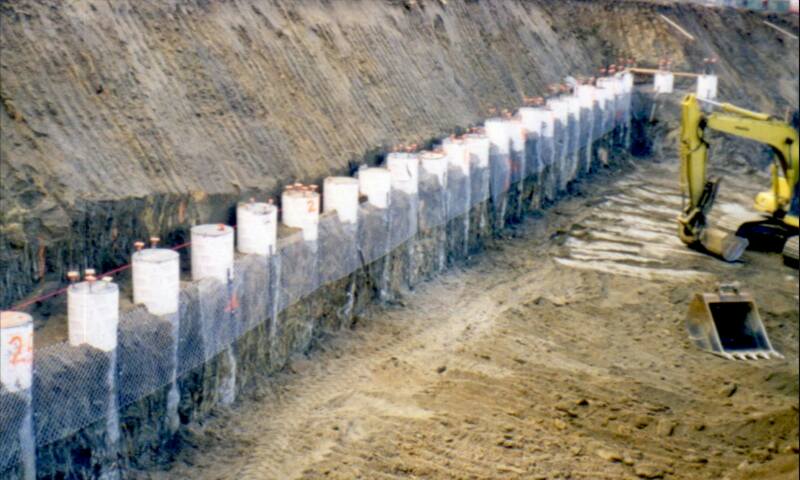
Soldier piles and lagging is a ground retention method that retains soil, by vertical steel piles with horizontal lagging. Characteristically, H-piles are drilled or driven at usual intervals along the planned excavation perimeter.


There use is increasing day by day in modern Civil Engineering works because of certain advantages. Different inventions are being done to improve site related issues.