Showing posts with label GROUND BEAMS IN FOUNDATIONS. Show all posts

Monday, September 28, 2015

Learn free Civil Engineering by Civilustaad about HELICAL PILE FOUNDATION

http://civilustaad.blogspot.com/
HELICAL PILE FOUNDATION
Helical Piles are steel shafts with a sequence of low-pitched circular steel helical plates welded at tactical positions along the shaft. 


The plates provide the foundation both tension and compression bearing capacity which enables them to be used for a broad range of applications across many industries and sectors.


The piles can be connected in groups using a steel load transfer grillage and are screwed openly into the ground by machine-mounted hydraulic or electrically powered drilling equipment. Helical Piles create the use of concrete for foundations a thing of the past.


Learn free Civil Engineering by Civilustaad about GROUND FREEZING

http://civilustaad.blogspot.com/
GROUND FREEZING
The ground freezing procedure converts in situ pore water to ice through the circulation of a chilled liquid using a system of small-diameter pipes placed in drilled holes. 


The ice acts to fuse the soil or rock particles together, creating a frozen mass of enhanced compressive strength and impermeability.


Sunday, September 27, 2015

Learn free Civil Engineering by Civilustaad about GRADE BEAMS FOUNDATION

http://civilustaad.blogspot.com/
GRADE BEAMS FOUNDATION

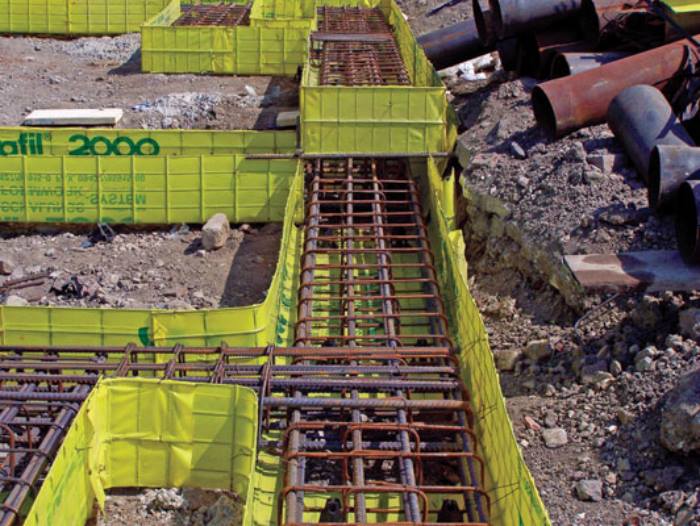
A grade beam or grade beam footing is a part of a building's foundation. It comprises of a reinforced concrete beam that transmits the load from a bearing wall into spaced foundations such as pile caps or caissons.


These are used in Civil Engineering Fields now a day.


Learn free Civil Engineering by Civilustaad about GROUND BEAMS IN FOUNDATIONS

http://civilustaad.blogspot.com/

GROUND BEAMS IN FOUNDATIONS

The foundation of a building is that part of walls, piers and columns in direct contact with, and transmitting loads to, the ground. 


The building foundation is occasionally referred to as the artificial foundation, and the ground on which it bears as the natural foundation. 


Early on buildings were founded on rock or firm ground; it was not until the beginning of the twentieth century that concrete was increasingly used as a foundation base for walls.


With the introduction of local and then national building regulations, standard forms of concrete foundations have become established practice in the UK, along with more exact investigation of the nature and bearing capacity of soil and bedrock.